TRUST Equestrian
TRUST Sweet Iron Waterford Pelham Bit
TRUST Sweet Iron Waterford Pelham Bit
Couldn't load pickup availability
With the classic shanks, this TRUST Sweet Iron Waterford Pelham is perfect for stronger horses that pull and lean on the bit. Anatomically shaped, the Sweet Iron bits are made of steel and have a recognizable blue color. Sweet Iron will rust when it comes into contact with air and moisture. The surface rust tastes sweet and naturally stimulates the saliva production. This will cause the horse to salivate more, which in turn will encourage a better acceptance of the bit.
With the multiple breaks, the waterford mouth conforms to the tongue and does not provide a true "brace point". Pelham bits are typically used with two sets of reins in order to offer precise communication with your horse. The Pelham Rein controls the leverage (shank/poll) while the snaffle rein controls the mouthpiece at the cheek, across the tongue and bars.
The bits of TRUST equestrian are very Dutch. All bits are designed, developed and handmade in the Netherlands. Every day, a team of technical professionals works on the production. The bits are assembled with the greatest care and made from the best materials. The quality control and standard are therefore very high. With every design, the balance between shape, material and weight is continuously taken into account. Trust’s bits are slightly curved, making them shape better towards the horse’s mouth. Because of this anatomical shape, the bit lies better in the mouth and the pressure is better distributed. Due to the wide choice of mouthpieces, jaw pieces and materials, TRUST strives to have a suitable bit for every horse.
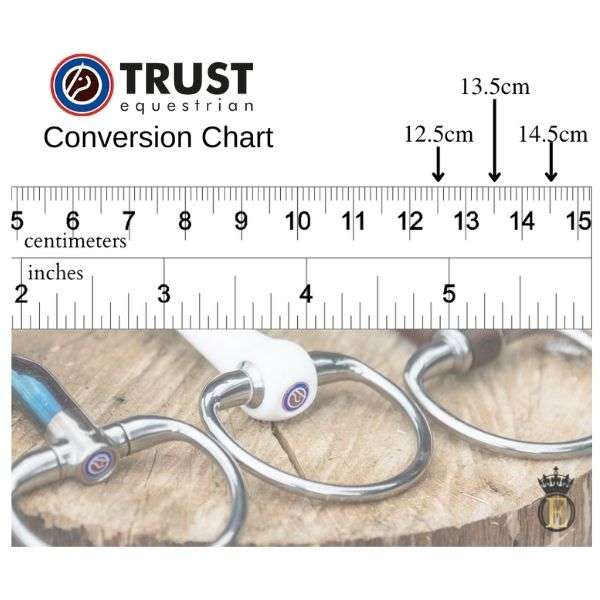
How to read TRUST metric sizing:
The first measurement is diameter (in mm) while the second measurement is mouthpiece size (in cm). Example = 15mm/12.5cm.
To ensure our clients’ safety against such communicable diseases as EHV 1, Equine Outfitters LLC does not accept returns or exchanges on bits, bit accessories & hackamores. Our policy is based on the AAEP suggested biosecurity guidelines.
Share